Cook's Hideout: Khova
Showing posts with label Khova. Show all posts

April 11, 2016

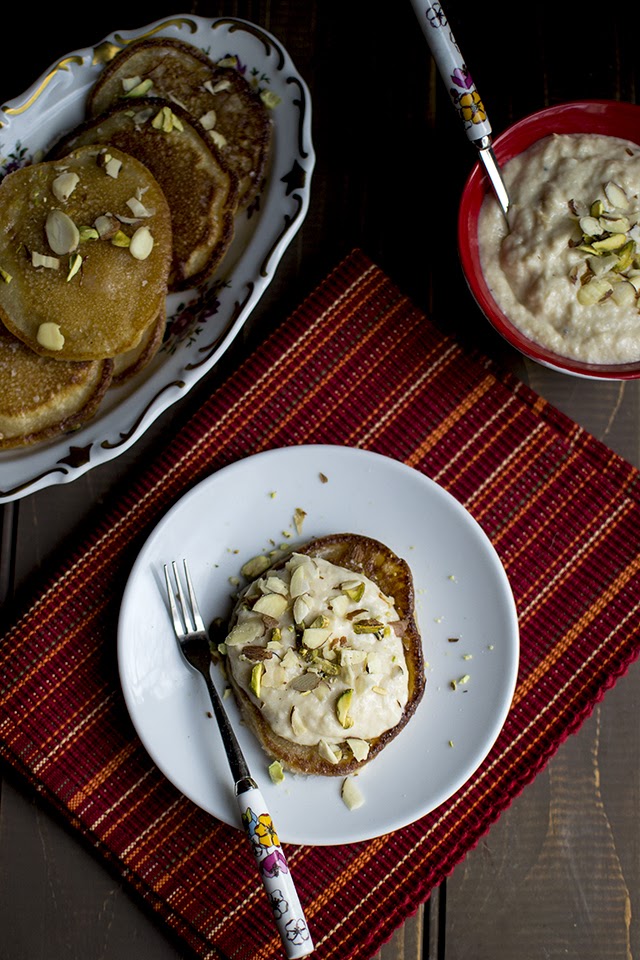
Instant Rabdi with Malpua (Rajasthani Rabri Malpua)

BM# 63: Journey through the Cuisines 
Week 2: Rajasthani Cuisine 
Day 9: I for Instant Rabri with Rajasthani Mawa Malpua
We are starting a new week in a new state today. After all the yummy Bengali dishes from last week I am going on a culinary journey through the desert state of Rajasthan. Again I have a sweet dish to start the week -- Instant Rabdi (Rabri) with Mawa Malpua.
Rajasthani Rabri with Malpua
Letter 'I' seemed a little difficult to find recipes for and after looking around the internet, I decided to make 'Imarti', a cousin of jalebi aka jhangri (in the Southern states). It is quite commonly made all over the country and technically cannot be associated with Rajasthan, but I took the plunge and finalized it for 'I'. I watched a few videos and I was confident that I had it all figured out. I set out an afternoon making the Imarti, but unfortunately (sob.. sob..) my imarti were epic failure. They were not juicy and sweet -- instead they were rubbery and sugar crusted :-(

April 30, 2014

West Bengal -- Lobong Lathika

Blogging Marathon# 39 - Indian States: Day 30
State: West Bengal
Dish: Lobong Lathika
The last Indian state we are going to visit today is West Bengal. It is located in eastern India and is the fourth most populated state in India. It is a major agricultural producer in India. West Bengal is noted for its political activism and for its cultural activities and presence of cultutal and educational institutions. The state capital Kolkata is known as the 'Cultural Capital of India'. The state's cultural heritage, besides varied folk traditiona, ranges from stalwarts in literature including Nobel-laureate Rabindranath Tagore to scores of musicians, film makers and artists. West Bengal is also distinct from most other Indian states in its appreciation and practice of playing football besides the national favorite sport Cricket.
Like the other states I mentioned, my dad was in West Bengal on work for extended period of time. He would send us rasgullas in big containers, which is why I wrongfully thought rasgullas were from Bengal (they are actually from Orissa). He brought back a a variety of beautiful clay dolls from Ghurni. Showcases in my parents house are filled with these lovely dolls.
Cuisine: Rice and fish are traditional favorite foods in Bengal. Bengalis LOVE their fish and have a vast repertoire of fish based dishes. Sweets/ desserts occupy a very important place in Bengali's diet and at their social ceremonies. They make distinctive sweets from milk products, like roshogolla, chomchom, kalojam, sandesh, pitha and the list is endless.
West Bengal -- Lobong Lathika

April 15, 2014

Mohanthal for ICC (Gujarati Besan-Mawa Burfi)

Valli picked a simple and delicious Gujarati special sweet for this month's Indian Cooking Challenge (ICC). I am a big fan of burfis/ fudges because they are easy to make and don't need too many ingredients. Today's burfi is a Gujarati special and is made with besan, mawa/ khoya, sugar and nuts. 
Mohanthal (Gujarati Besan-Mawa Burfi)This sweet is very simple to make and can be done in less than an hour. Only complicated thing involved is to know when the burfi reaches the right consistency. I took it out of the pan a few seconds early and the burfi didn't set and was a little sticky. So I put it back in the pan and cooked it for another couple minutes to get the nice, soft, melt-in-the-mouth burfi. It does require quite a bit of sugar and ghee, so eat them in moderation. They can be stored in an airtight container for up to 7~10 days.

December 10, 2012

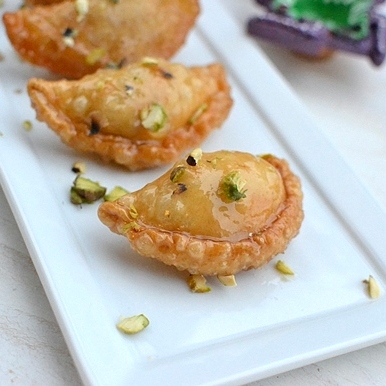
Gujia

I'm excited about this week's Blogging Marathon because my theme for this week is "Traditional Dishes" and since I have my mom here with me, I was really able to make the dishes the traditional way. Valli wanted us to choose 3 dishes from the 10 she listed. I had only made 1 or 2 dishes out these 10 and so I was game to try the rest.

July 15, 2012

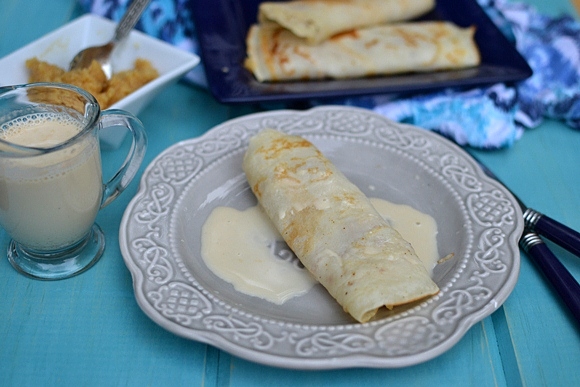
ICC June - Pati Shapta

For this month's Indian Cooking Challenge (ICC), Valli chose a Bengali dessert usually made during the Sankranthi season. I have missed quite a few ICC challenges but when I saw this scrumptious dessert, I knew I had to make them.
I thought Pati Shapta were Indian version of French crepes that are filled with delicious coconut-khoya filling and drizzled with sweet syrup. They were easier to make than the French crepes and the filling was to die for. We thoroughly enjoyed these and the reheated leftovers taste just as good.

January 15, 2010

Moong Dal Halwa (Burfi) for ICC

For this month's Indian Cooking Challenge (ICC), Srivalli chose this super yummy Moong dal Halwa, recipe courtesy Simran's mom. I started to drool the minute I read the recipe and wanted to make it asap. But the little one hot sick and then passed some germs on to me, so couldn't make it until the last minute.

So on Sankranthi day and with a partially impaired ear (due to infection), I finally made it. I'm sooooo happy with how it turned out. Simran's mom's recipe was perfect and it tasted awesome. I poured the halwa onto a lightly greased plate and when cool enough to handle, cut into squares. My son loved them too.

Here's the recipe from Valli:
Ingredients:
Split Moong dal - 1/2 cup
Khowa - 1/4 cup
Sugar - 1/2 cup
Ghee - 1/4 cup
Cashews & Raisins - for garnish

Method:
  • Lightly roast moong dal and soak in water overnight. In the morning, grind dal with little water to make a smooth paste.
  • In a heavy bottom pan; melt ghee and add the paste. Cook until dal turns slightly brownish and ghee starts to separate.
  • Next add khowa and sugar and cook until sugar is melted and everything is completely incorporated.
  • Once the mixture starts to pull away from the sides, remove onto a lightly greased plate and smooth the top with a spoon.
  • When cool enough to handle, cut into squares and enjoy...
Signature

October 31, 2009

Gulab Jamuns for Indian Cooking Challenge

When Srivalli chose gulab jamuns for this month's Indian Cooking Challenge, I was kind of excited and nervous since I have never made them from scratch before and was expecting a total failure with exploding jamuns in oil. The good news is they didn’t explode but the bad news is my jamuns got a tad bit harder after frying which I assume is because of the excess amount of flour I added to the khoya.

Ok let me back up a little bit and tell you the whole story. I chose Alka’s recipe for my Gulab Jamuns. I started out making the khowa with 4 cups of whole milk which I boiled for 2½ hours on low simmer. The khowa was still a little wet when I took it out of the pan. I let it cool for about 2-3 hrs and then I made the dough by adding the flour & corn starch. I added a tbsp of flour in the beginning and when I saw that the dough was still wet, I added another tbsp of flour and then another and then another and so on.. Well in the end the dough looked pretty good and I was able to make tiny jamuns. I didn’t realize that they formed a crust on the top and didn’t let the jamuns soak the sugar syrup. They tasted pretty good even though we had to struggle to cut them with spoon :-). I was a little disappointed with the end result but now I think I have the tools to make gulab jamun from scratch.


Here’s Alka’s recipe verbatim:

For sugar syrup:
Ingredients:
Sugar - 500 gms (This can be reduced as per taste)
Water - 1 & 1/2 cup (bit more or less)
Cardamom - 2-3
One spoon of milk (optional)
Few threads of saffron (optional)
2-3 drops of rosewater (optional but highly recommended)

Method:
  • Mix about 500 gms of white sugar in one and half cup water and keep it for boiling.
  • Add a spoonful of milk to remove the impurities (impurities if any, will form a scum on surface).
  • Add 2-3 green cardamoms also in syrup for strong flavor, and a tad of saffron strings (optional).
  • Boil until you get just a tad sticky syrup. Gulab Jamun syrup is not very dense nor too dilute as in Rasgulla.
  • Strain the syrup, add rosewater when syrup is slightly cooled.Always remember two things while using rose water, do not add it while syrup is bubbling hot or on fire, and be particular about the quantity mentioned in every recipe, since even few drops of excess rosewater could lend a bitter taste to the final product.
For Gulab Jamun:
Ingredients:
Unsweetened Maawa/ khowa* - 250 gms
All purpose flour - 1 & 1/2 - 2 tsp
Cornflour - 1 tsp
Green cardamom - 1-2 crushed
Oil for shallow frying

* (read my comments above on making khowa.

Method:
  • Mix all the ingredients in a wide mixing bowl until soft textured dough is obtained (keep mixing until it is really soft).
  • Make very small sized balls (bit larger than pebbles) as they swell up after frying and soaking in syrup.
  • Make sure that the surface of dough balls is really smooth without any cracks. In case the cracks refuse to go away, slightly wet your palms with water and roll the flour till absolutely smooth.
  • Now take little oil for frying in preferably flat bottomed pan, and heat the oil. But gulab jamuns are to be fried on LOW FLAME or else the surface will be browned while the core will remain uncooked. Some prefer to place an unsalted pistachio in the center of every gulab jamun while making balls, that way the core of gulab jamun is not left uncooked.
  • Fry one or 2 gulab jamuns at a time and always remember to STIR THE OIL with slotted spoon AND NOT TO TOUCH GULABJAMUNS, which means keep swirling the oil without tossing or turning gulab jamun.
  • Fry till light brown in colour, remove on tissue paper and repeat the procedure with rest of dough.
  • Now soak these in COOL syrup for few hours. They will surely swell up.
These can be stored in the same syrup till consumed.
If there are cracks in the balls before frying it will burst open while frying, in that case adding a bit of cornflour will surely help.

Signature

August 22, 2008

Gulab Jamuns from Scratch

My MIL makes awesome gulab jamuns from scratch. I grew up eating MTR jamuns and I loved them until I tasted the jamuns made from scratch with khoya. They are quite easy to make and they taste soooo good.

Ingredients:
Khova/ Khoya – 1 pkg (I used Nanak frozen khoya)
Sooji (semolina) – ¼ cup
Cardamom powder – 1 tsp
Oil/ Ghee – enough for frying

For the syrup:
Sugar – 2 cups


Method:
  • Thaw khoya by leaving it in the refrigerator overnight and resting on the counter for couple of hours.
  • Add water to sooji and knead till it resembles roti dough. Cover and let it rest for about 1 hour. Knead again for another 5 minutes.
  • Add 2 cups of water to sugar and simmer till the sugar melts about 15-20 minutes.
  • Crumble khova into the food processor and add sooji dough & cardamom powder. Pulse until it almost comes together, about 3-5 minutes. Remove into a bowl and knead well for at least 10 minutes.
  • Roll them into small balls. My MIL makes them into bullet shaped balls because they fry up better without any rawness in the center.
  • While the jamuns are being made, heat oil/ ghee; when it is hot enough, slowly slide in the first batch of jamuns and fry on medium flame till golden brown. Do not over crowd the pan; always fry in batches. Also keep an eye on the oil temperature; too hot jamuns burn.. not hot enough jamun centers are uncooked. Remove the fried jamuns onto a plate and let them cool for couple of minutes, before sliding them into the sugar syrup.

Enjoy warm or cold with some ice cream. These jamuns stay fresh at room temperature for upto 4-5 days. Makes about 25 jamuns.

LinkWithin

Related Posts Widget for Blogs by LinkWithin
Blogging tips