Cook's Hideout

January 05, 2016

Godhuma Rava Pongali

Blogging Marathon# 60: Week 1/ Day 3
Theme: Festival of the month Recipes
Dish: Godhuma Rava Pongali
I have another sweet dish for the last day of this week's marathon. Sweet pongali or Shakkara pongali is traditionally made for Sankranthi. Coincidentally in Tamil Nadu, sankranthi is called pongal which is also the name of a rice & lentil based dish.
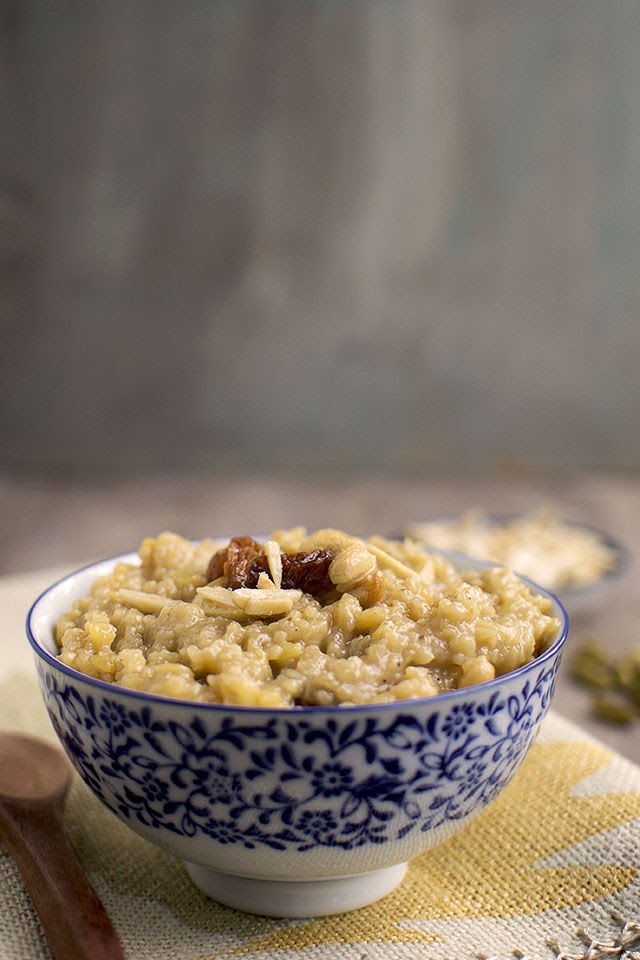
Wheat Rawa Pongali
My sweet pongal slightly deviates from the traditional dish because I used godhuma rawa/ wheat rawa/ cracked wheat instead of rice. I think fine bulgur will be a good substitute for cracked wheat. Other than change in the grain everything else remains the same as the rice based version.

January 04, 2016

Jonna Rava Kesari with Fruits

Blogging Marathon# 60: Week 1/ Day 2
Theme: Festival of the month Recipes
Dish: Fruit Jonna Rawa Kesari
Today I have a sweet dish made with jonna rawa or jowar/ sorghum rawa instead of regular sooji or semolina. This recipe is from a Telugu cooking channel and even though I'm not into cooking fruits, this dish looked yummy on TV that I had to try it for myself.

Jowar Kesari with Fruits
Kesari is traditionally made with either sooji or godhuma/ wheat rawa. Using jonna rawa is a healthy substitute which gives a chewy texture to the dish. 

January 03, 2016

Barley Pulihora (Lemon flavored Pearl Barley)

Blogging Marathon# 60: Week 1/ Day 1
Theme: Festival of the month Recipes
Dish: Barley Pulihora
I'm starting the first marathon of the year with recipes for 'Festival of the month' theme. I picked the first festival on the Hindu calendar, Sankranthi or Pongal. Makar Sankranthi is a harvest festival is celebrated all over India and even Nepal. The day is believed to mark the arrival of spring in India. It usually falls on the 14th of January and sometimes on the 13th or 15th January.
Lemon flavored Pearl Barley
In AP, where I grew up it is celebrated for 3 days. The first day is called 'Bhogi' when at dawn, people light a bonfire with wood logs and other solid fuels, representing the disposal of old habits, vices and so on. In the evening, infants and children are showered with Regi pallu (Indian jujube fruit). This is believed to wade of any evil from the kids. It is a time for the family to get together.

January 01, 2016

New Year's Black Eyed Peas and Greens

Here's wishing you all very Happy and Prosperous New Year 2016!!
My first post for the year is this healthy Black eyed peas and greens recipe that is a take on Hoppin' John made in the American South.Eating legumes on New Year's day is a custom that many cultures around the world embrace. Lentils represent a wish for prosperity in Italy and Brazil. Black soybeans are on the menu for New Year's in Japan.Every culture has its own reason for the tradition, but it is a well known fact that beans are low in fat, cholesterol and calories, yet loaded with fiber, protein, vitamins and minerals.
Black Eyed Peas for New Year
In the south, black eyed peas are usually eaten on new year's. The peas represent coins, and are often eaten along side collard greens, which represent paper money. This recipe is from Vegetarian Times magazine and it uses kale instead of collard greens.

LinkWithin

Related Posts Widget for Blogs by LinkWithin
Blogging tips