Cook's Hideout

June 10, 2006

Undrallu & Allam Pachadi

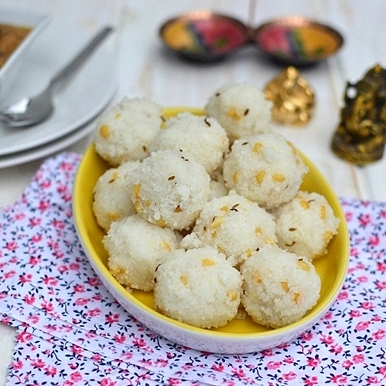
Undrallu, savory ones, are made as naivedyam (offering to god) for Lord Vinayaka especially on Ganesh Chathurthi day. Sweet undrallu are also made and you can find Indira's delicious sweet undrallu here. But in our house, we make undrallu not only as an offering, but also as a quick snack and dinner item.
Couple of years ago, for Vinayaka chavithi, I was looking for a recipe for Undrallu.. I googled for hours and couldnt find one for savory undrallu. Then I got this authentic, tested and tried recipe from... duh.. should have asked her in the first place.. my mom.. The main principle is to make upma (porridge) with rice rawa, make them into balls and then steam them. It is quite simple and low fat (You can make them no fat too).
 
Ingredients:
Rice Rawa (Biyyapu rawa) - 1/2 cup
Jeera - 1 tsp
Chana dal (Senaga pappu) - 1 tbsp
Salt - to taste

Method:
  • Soak chana dal in water for atleast 10minutes.
  • Heat about 1tsp of oil in a saucepan and add jeera.
  • Add 1 cup of water (1: 2; Rawa: water ratio) to the pan and bring to a boil.
  • After the water starts boiling add salt, soaked chana dal and slowly add rawa. Stir continuously to make sure that there are no lumps.
  • Cook until the mixture comes together and looks like upma. Consistency should be neither too wet (if this is the case cook a little longer) nor too dry(add little water).
  • Let this mixture cool till it is easy to handle.
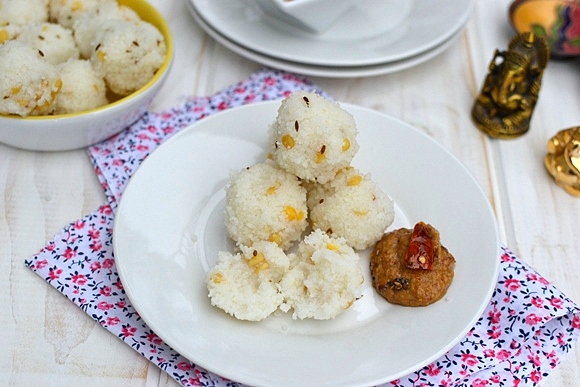
  • Make lemon size balls of the mixture and steam them for about 10-12 minutes in a pressure cooker.
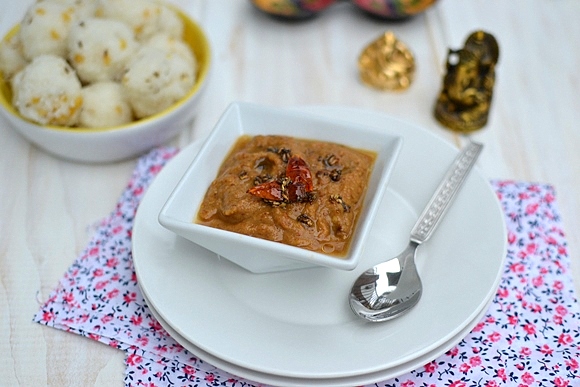
  • Serve hot with any chutney. We had our undrallu with ginger chutney (allam pachadi).
 
Allam Pachadi (Ginger Chutney)
Ingredients:
Ginger - 3"piece chopped into small pieces
Jaggery - 1/4cup
Tamarind - small lemon size ball
Salt - to taste

Seasoning:
Red chilies - 3
Chana dal (senaga pappu)- 1tbsp
Urad dal (minapappu)- 1tbsp
Jeera - 1tbsp

Method:
  • Heat 1tbsp oil in a pan, add the seasoning and fry till the dals turn golden brown.
  • Turn the heat off and add ginger, tamarind and jaggery.
  • After the mixture cools completely, grind into a smooth paste adding little water and salt.
Allam pachadi is delicious with the sweetness from jaggery, tanginess from tamarind and special zing from ginger. It also goes well with idlis and dosas.

June 07, 2006

Less than 30minutes One-pot dinner

Its been raining steadily since morning here. Traffic in New Jersey is bad everyday, but when it rains it becomes worse. I sat in traffic for almost 45minutes each way today. I shouldn’t complain since my poor husband spent double that time (each way) in traffic watching rain and snail-paced traffic. What I don’t understand is the reason for slow moving traffic, no accident, and no detours. This is like a big mystery to me.

Anyway I came home late and wanted to make something quick. We bought this big box of frozen pierogies from BJ’s sometime back and I wanted to use them up. Pierogies are semicircular dumplings and are usually filled with finely chopped meat or vegetables.

I had my first pierogie almost 2years ago. My ex-colleague, a really nice Polish lady, had brought some pierogies (sautéed in butter with onions) that she made to work. They were sooo good that they melt in your mouth. According to her frozen pierogies is no match to the homemade ones. But I neither have the skill nor the patience to make them at home; so frozen ones are a good substitute.

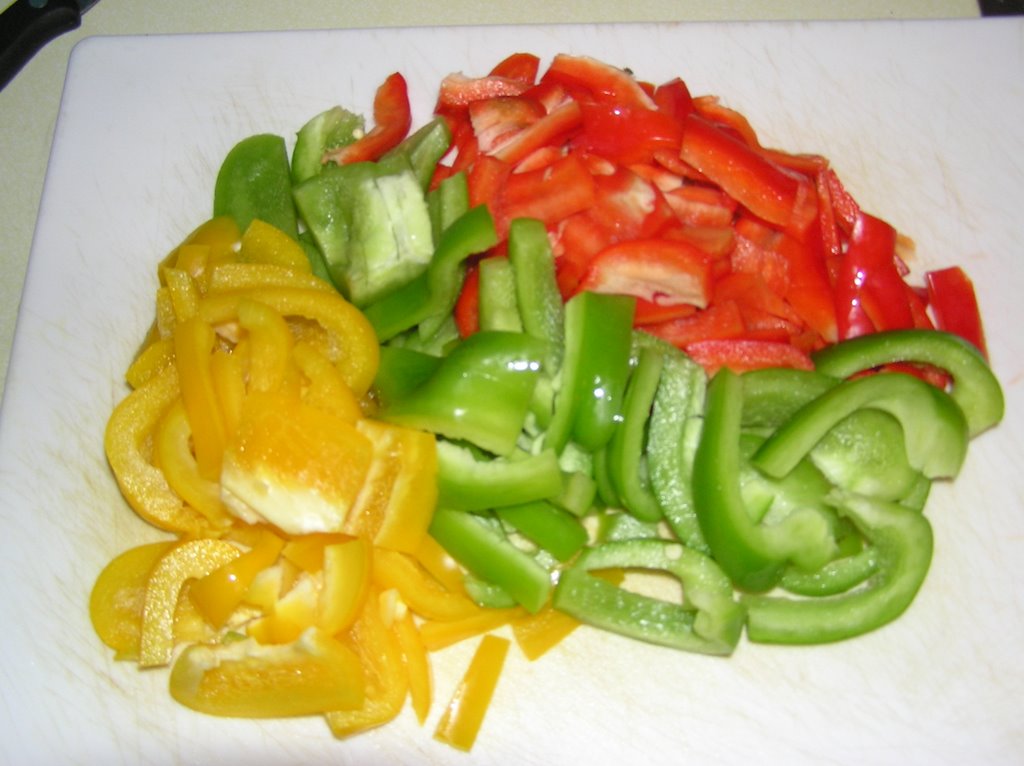
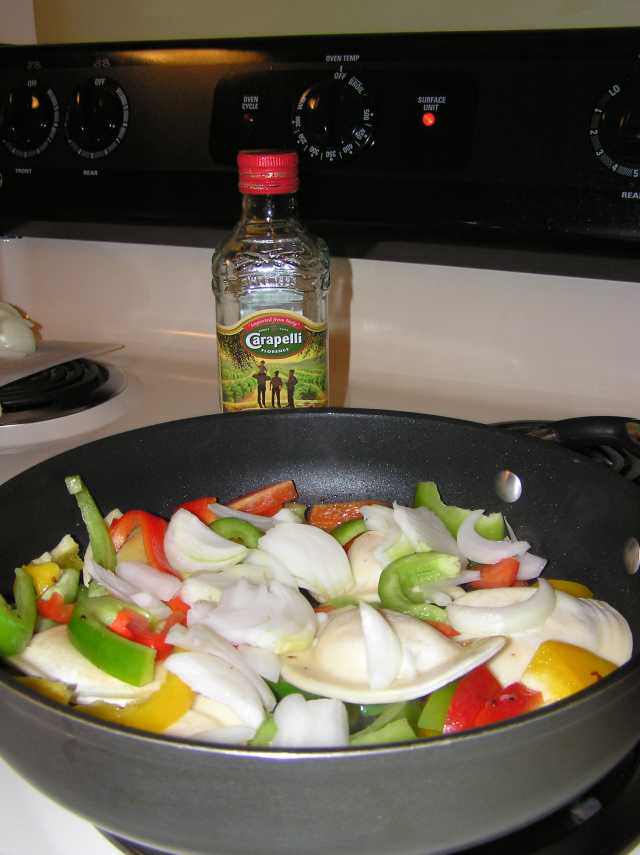
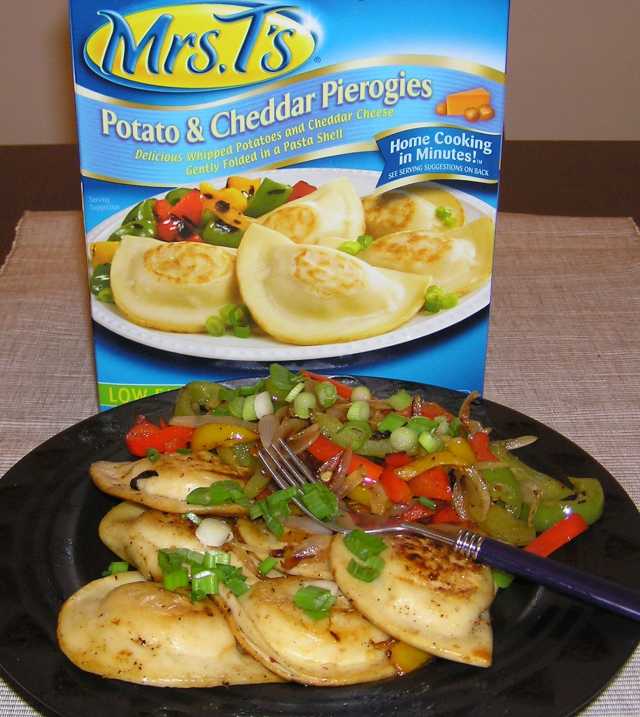
I sautéed the pierogies (with potatoes and cheddar cheese) in little butter and olive oil with three different peppers.

Ingredients:

Frozen pierogies – 5-6 (per person)
Green pepper – 1
Red pepper - 1
Yellow pepper – 1
Onion – 1
Red pepper flakes – ½ tsp
Butter – 1tsp
Olive oil – 1tsp
Salt and pepper – to taste

Method:

  • Heat butter & oil in a pan. Add red pepper flakes, pierogies and all the veggies (thinly sliced).
  • Sauté until the pierogies are golden brown on both sides. Takes about 8-10minutes.
  • Add salt and pepper to taste. This dish is very easy and filling too.
PS: I didnt notice until my husband was about to take the picture that the picture on the box was exacty what I made. What a coincidence!!!!!

June 06, 2006

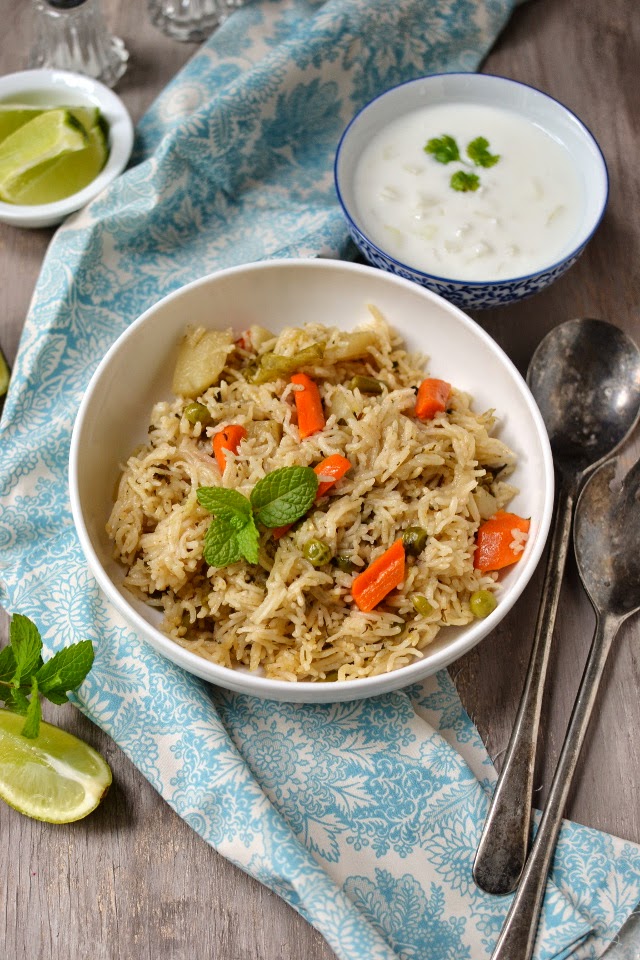
Vegetable Pudina Pulao

Growing up, I always thought pudina (mint) was a little strong for my taste. But now I like the refreshing flavor of fresh mint. My aunt used to make vegetable pulao with mint and I tried to make it my way.

Ingredients:
Basmati Rice – 1½ cups (soaked in water for at least ½ hr)
Potatoes – 2 small or 1 medium
Mixed vegetables (carrots, beans, peas) – ½ cup (I used frozen mixed vegetables)
Onion – 1 medium thinly sliced
Pudina (Mint) – ½ cup
Green chilies – 2-3
Chili powder – ½ tsp
Ginger-garlic paste – ½ tsp
Garam masala – ½ tsp
Salt – to taste
Spices:
Cinnamon – 1” stick
Cardamom – 2-3 pods
Bay leaf – 1
Cloves – 2-3
Method:
  • Make a paste of mint and green chilies adding very little water.
  • Heat 2tbsp of oil in pressure cooker. Add all the spices and sauté for 1minute.
  • Add onions and ginger-garlic paste fry till translucent. Add all the veggies, mint-chili paste mix well.
  • After the veggies sweat out for about 5 minutes, add rice, chili powder, garam masala, salt and water. Pressure cook for 2 whistles.
  • Serve hot with onion raita and chips.

June 03, 2006

Garlic - Mistress of Spices

Mythili of Vindu is hosting Mistress of Spice event that showcases condiments and spices. I am doing a round up on the most widely used spice in the world “Garlic”.

Garlic/ Vellulli (telugu)/ Lahsun (hindi)/ Poondu (tamil)/ Bellulli (kannada) is fondly known as “the stinking-rose”. Allium Sativum is the botanical name of this perennial plant and is a member of the onion family. But it differs from onions in form as well as taste. Instead of one large bulb, garlic produces a dozen or so small ones called cloves, surrounded by a thin, papery skin.

Growing Garlic:

Garlic does not grow in the wild, and since true seeds are not produced by the garlic plant; cloves of the bulb are used for propagation. Of the 700 species of genus Allium, many are native to Central Asia.

Garlic is easy to grow and very hardy, but it performs best in milder and dry climates. Garlic is planted in the fall (in cold regions) or early spring for best development before the summer harvest season. Ample and consistent water is needed for the first five months of growth, as well as full sun. This site has information for growing garlic.


Garlic Flower

Part of the Plant:

The part of the plant that is most often consumed is an underground storage structure called a head. A head of garlic is composed of a dozen or more discrete cloves, each of which is a botanical bulb, an underground structure comprised of thickened leaf bases. The above-ground portions of the garlic plant are also sometimes consumed, particularly while immature and tender.


Kitchen Uses:

Garlic is most often used as a flavoring agent but can also be eaten as a vegetable. It is used to flavor many foods, such as salad dressings, vinaigrettes, marinades, sauces, vegetables, soups, and stews.

Green garlic is garlic that is harvested when it is immature. It has a definite garlic flavor without the bite of mature garlic. It can be eaten fresh like scallions or green onions but it can also be used in other foods the same as mature garlic.

Garlic is used in some form of the other in all of the world’s cuisines. Curiously enough, Northern Europeans seem to be the only ones who look on it with suspicion because of its strong smell, which is sometimes felt unpleasant.


Medicinal Uses:

Garlic is quite a wonderful little bulb with a reputation in folklore for preventing everything from the common cold and flu to the Plague! Garlic is used to treat flu, bronchitis and it's also an antiseptic. Garlic also helps to clear fat accumulations from the blood vessels, lower cholesterol and protect against bacterial and viral infections. It also treats athlete's foot, bug bites, earache, leukemia, malaria, and toothache.

Studies have shown garlic can suppress the growth of tumors, and is a potent antioxidant good for cardiovascular health.

Tips:

  • Intensity of flavor depends on how garlic is prepared. Whole & sliced cloves have milder flavors when compared to smashed or minced cloves. Smaller the clove is chopped greater is the flavor.
  • Place garlic cloves in the microwave for 15 seconds and the skins should peel off easily.
  • Add garlic flavor to your salad by cutting a raw garlic clove in half and rubbing the inside of your bowl with the cut edge of the clove.
  • Don't throw out sprouting garlic. Instead, plant the cloves fairly close together in a pot or in the garden (if your climate is suitable at the time). The new shoots that appear will have a mild garlic flavor and can be used in the same manner as regular chives.
  • To remove the garlic odor from your hands after working with garlic, wash hands thoroughly and then use some type of stainless steel device that can be worked over and around the areas affected on fingers or hands.

LinkWithin

Related Posts Widget for Blogs by LinkWithin
Blogging tips